
Problems with a dental implant
An implant can ache, bleed, or feel loose. The problem may involve the crown or screw, the gum, or the bone supporting the implant. Assessment is needed to tell these apart.
What if the implant feels loose?
A loose crown or screw is different from an implant that moves in the bone. A dentist needs to identify which part is moving before deciding whether it can be repaired.
Contact a dentist promptly for severe dental pain, swelling, or a tooth or implant that feels loose. If swelling makes it hard to breathe or swallow, seek emergency medical care now.
What other signs should you watch for?
Bleeding, swelling, soreness, or pain when chewing are reasons to have an implant checked. Your dentist or hygienist may also notice a change that you cannot feel.
Bone loss can occur without pain, so comfort alone does not show that an implant is healthy.
What can go wrong around an implant?
Bacteria can cause inflammation in the gum around an implant. When the supporting bone is also being lost, the condition is called peri-implantitis.
The risk is higher with a history of gum disease, smoking, diabetes, difficulty cleaning around the implant, and cement left under the crown.
Problems can also affect the replacement tooth and its components. A crown can loosen, chip, or wear, and a screw or other part can become damaged.
An implant cannot get a cavity, but its surrounding tissues can become diseased. The gum-disease guide explains inflammation and loss of support around natural teeth.
What happens at the examination?
Dr. Smith examines the gum around the implant and measures the space between the gum and implant with a small probe. He checks for bleeding, swelling, and movement of the crown or implant.
X-rays show the bone level. Comparing them with older X-rays helps show whether the bone has changed. Dr. Smith also asks what you have noticed and when it started.
What can be done about an implant problem?
Inflammation limited to the gum is called peri-implant mucositis. Treatment usually includes cleaning around the implant and checking that you can keep the area clean at home.
Peri-implantitis involves loss of supporting bone. Treatment begins with controlling inflammation and improving cleaning. Surgery may be needed to reach and treat the affected implant surface. Bone grafting may be considered for some defects.
A loose or damaged component may be repairable, depending on what has happened. If the implant itself has lost too much support, removal may be necessary. The plan should also address how to manage the space afterward.
Terms you may hear
- Peri-implant mucositis
- Inflammation limited to the gum around an implant, without progressive loss of supporting bone.
- Peri-implantitis
- Inflammation around an implant with loss of supporting bone.
What treatment can and cannot do
Treatment aims to control inflammation and limit further bone loss. Bone grafting may be considered for some defects, but it cannot reliably restore all lost support. Whether an implant can be kept depends on its stability, the damage around it, and the response to treatment.
Peri-implantitis: five-year follow-up
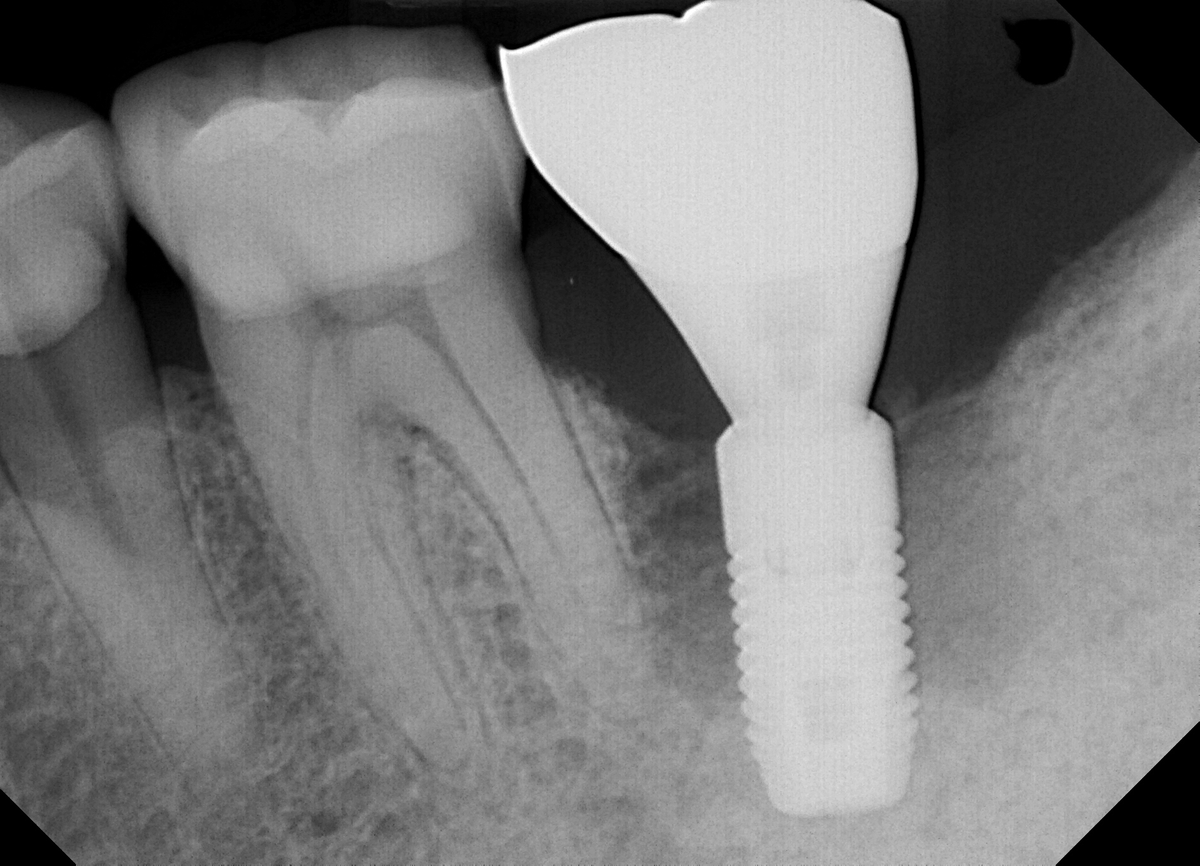
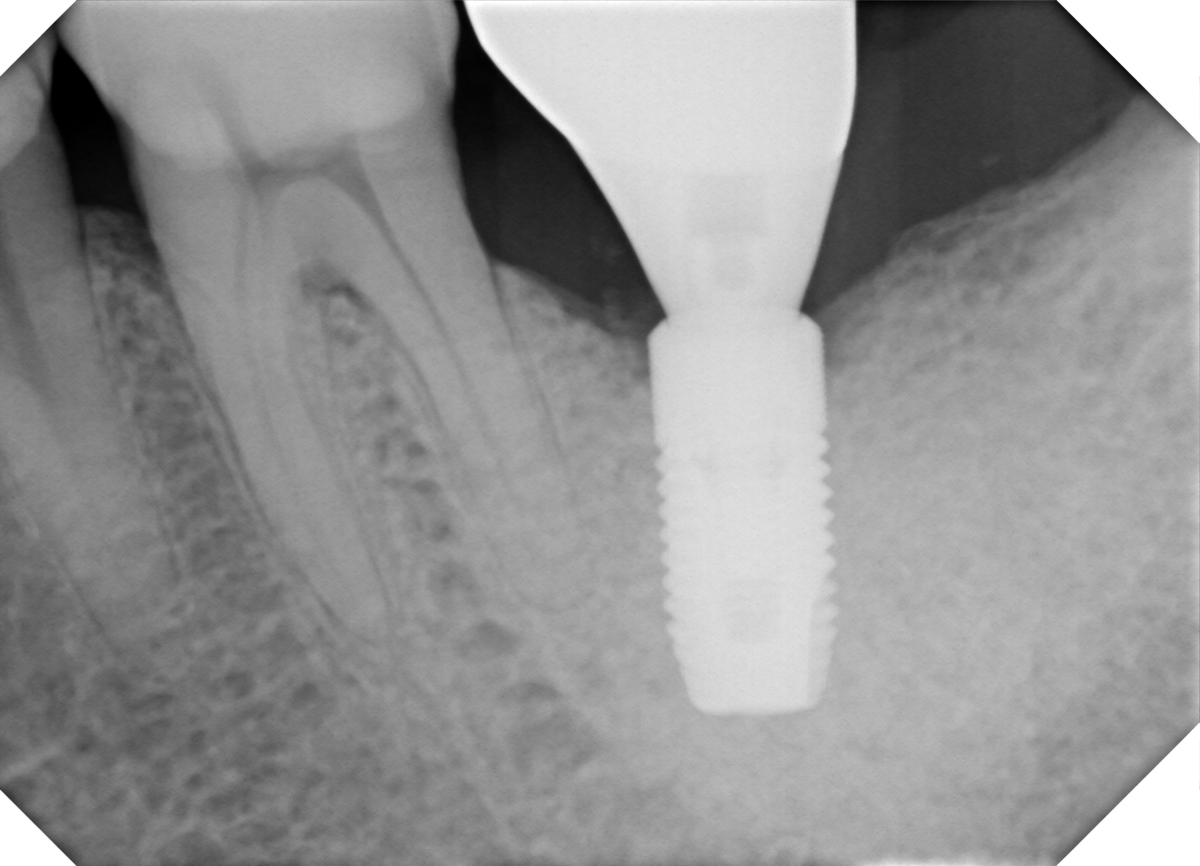
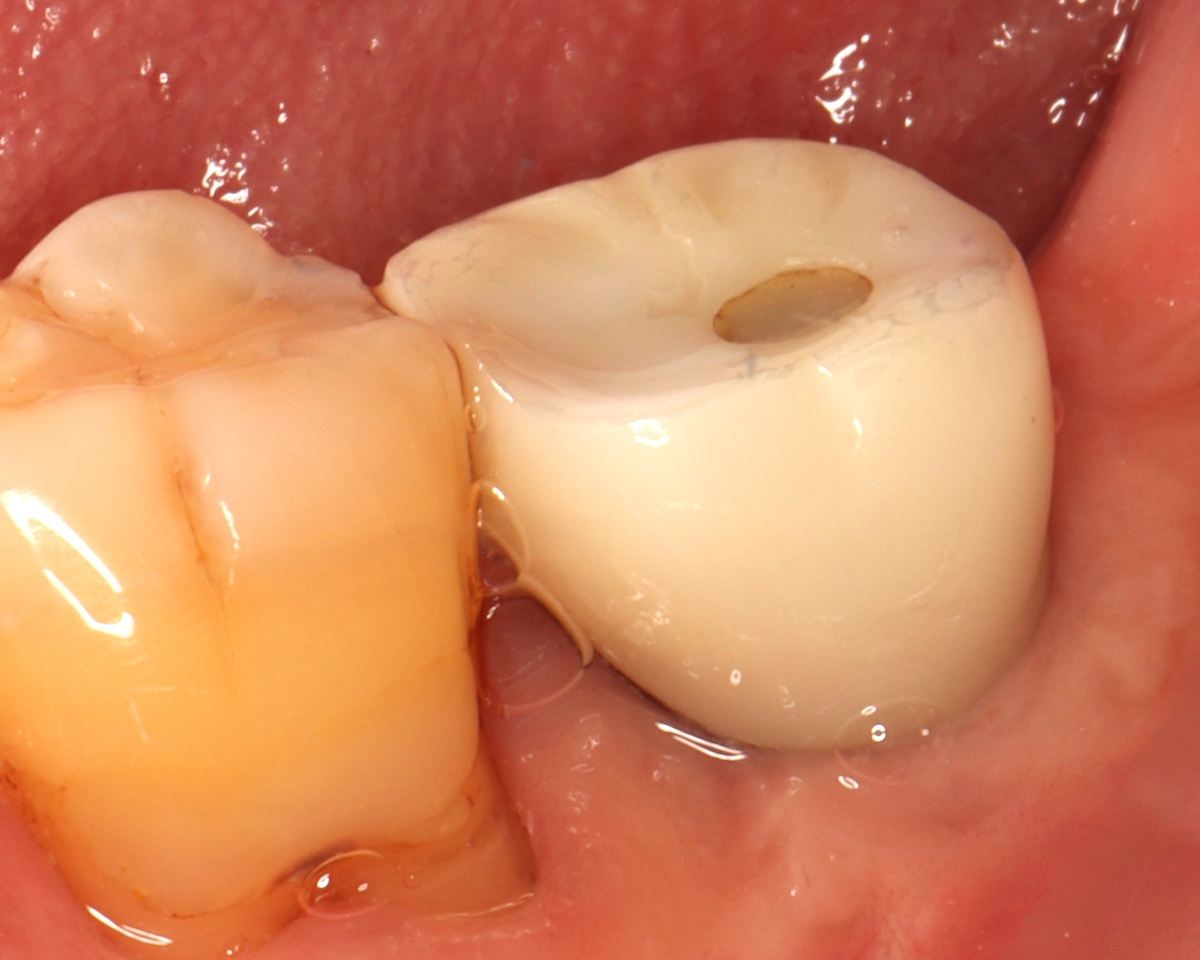
Peri-implantitis case shown before treatment and at five-year follow-up, including a clinical photograph at five years. Individual results vary.
Treatment: Open-flap debridement to access and clean the implant surface using mechanical and chemical methods, followed by guided bone regeneration (GBR) with an allograft bone graft and a collagen membrane.
X-rays resized for display; their viewing angles differ. The clinical photograph is cropped for display, and three small dark marks on the crown surface were removed. Gum tissue and color are not retouched.
Select an image to view it larger.
What happens if you wait?
Bone loss around an implant can develop without pain. Bleeding, swelling, discomfort, or movement needs assessment. Monitoring is appropriate only when a dentist has assessed the problem and recommended follow-up; feeling no change does not show that the bone is stable.
What does it cost?
Each office sets its own consultation fee, so ask when you book. Your treatment estimate depends on what the examination finds.
Ask for an estimate that separates treatment around the implant from any work on the crown or other components. If more than one office is involved, ask which office charges for each part.
How does this fit with your general dentist?
Implant care may involve the office that placed the implant, the office that made the crown, and your general dentist. Dr. Smith works with them so the plan fits the whole mouth, and your general dentist keeps providing routine care.
After treatment, the implant is checked at maintenance visits, which usually alternate every three months between Dr. Smith's office and your general dentist.
Questions to bring to a consultation
- Which part is causing the problem?
- Is bone being lost around the implant?
- Can this implant be kept, and what would that involve?
- What could change if we wait?
- Who will provide each part of treatment and follow-up?
- What will each part cost?
Discuss your concern with Dr. Smith
Call the office you would like to visit and describe what you have noticed. If you are worried about discomfort or cost, mention it when you call.
Offices and contactSources for this guide
- FDA: dental implants and reporting implant problems
- American Academy of Periodontology: peri-implant diseases
- European Federation of Periodontology: prevention and treatment guideline
- MedlinePlus: tooth abscess
- MedlinePlus: dental infection that affects breathing (Ludwig angina)
Authorship and clinical review
Written and reviewed by John L. Smith, DDS, MS, periodontist. Last reviewed .