
Gum recession
Gum recession means the gum has pulled back and part of the root is exposed. A tooth may look longer or become sensitive to cold. Not every area of recession needs a graft.
What causes gums to recede?
Gum recession can involve gum disease, brushing trauma, thin gum tissue, and the position of a tooth. More than one factor may contribute. An examination looks for inflammation, damage, and the tissue around each affected tooth.
What signs should you watch for?
A tooth may look longer than it used to, and cold drinks may sting. The exposed root can be more vulnerable to wear and decay.
Some people have no symptoms. A notch at the gumline can also involve wear of the tooth, so an examination needs to assess both the gum and the root.
What happens at the examination?
Dr. Smith checks the gumline, how much root is exposed, and the thickness of the gum tissue. He looks for inflammation, brushing trauma, and root sensitivity, wear, or decay.
Measurements can be compared with earlier records or later checks to see whether recession is progressing. Tell your dentist if you grind or clench your teeth so it can be assessed separately.
What can be done about receding gums?
Options include monitoring, changes in brushing, treatment of gum disease or root sensitivity, and a gum graft. A graft adds tissue to cover an exposed root or thicken thin tissue.
If brushing is injuring the gum, a gentler technique can reduce further trauma. It does not replace gum tissue already lost. Ask how to clean the affected area without damaging it.
A graft can use tissue from the roof of your mouth or another donor source. The area is numbed, and stitches hold the tissue in place as it heals. Gum graft cost, pain, and recovery explains what affects an estimate and how to plan for healing.
What treatment can and cannot do
A graft may cover an exposed root, thicken the gum, and reduce sensitivity. How much of the root can be covered depends largely on the gum and bone between the teeth. When that support is intact, full coverage is often possible; when it has been lost, partial coverage is more realistic. Some sensitivity can remain.
A soft-tissue graft does not replace lost bone or remove the factors contributing to recession. Inflammation and brushing trauma still need attention, and recession can recur. A graft is not needed for every affected tooth.
Gum grafting: before and after
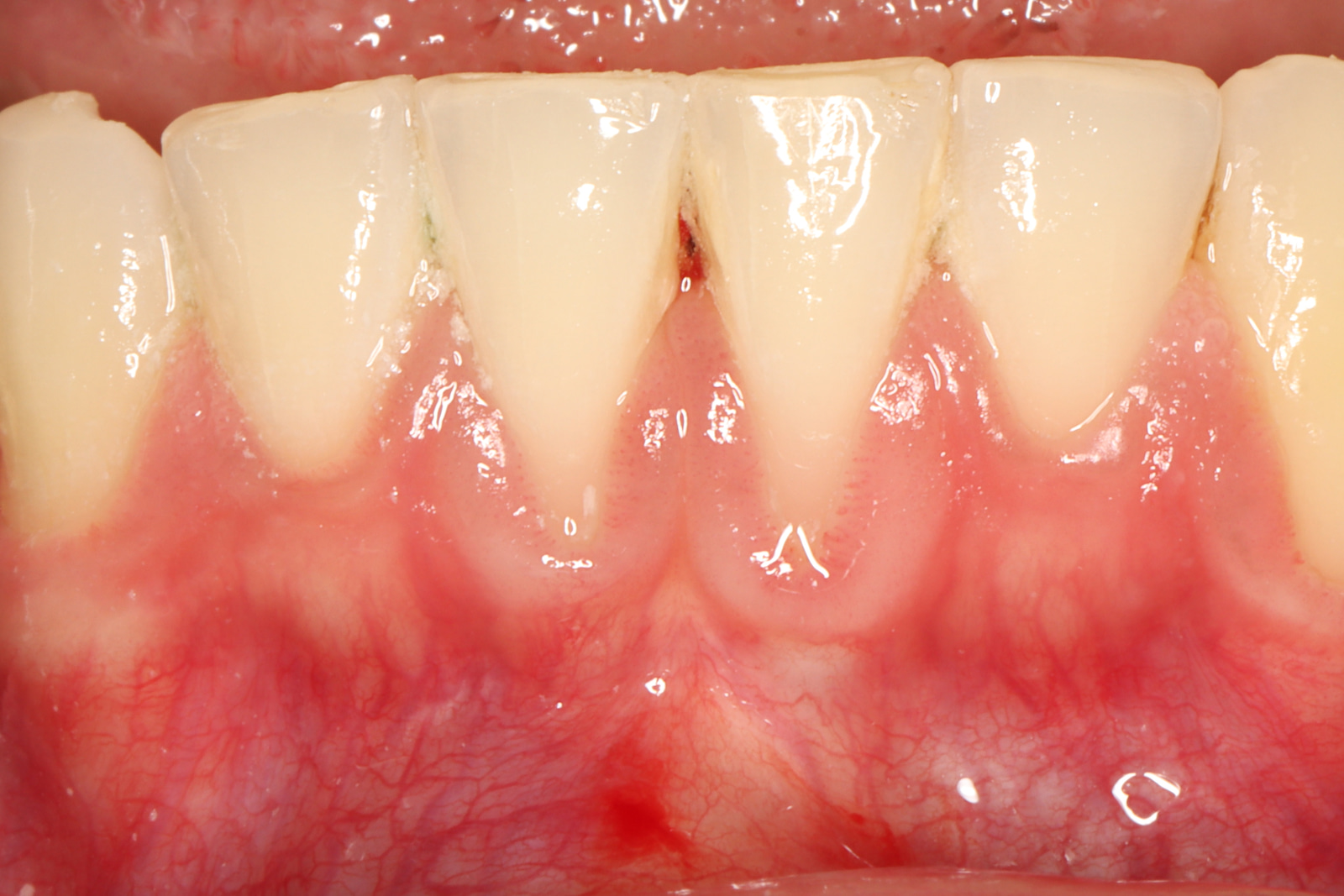
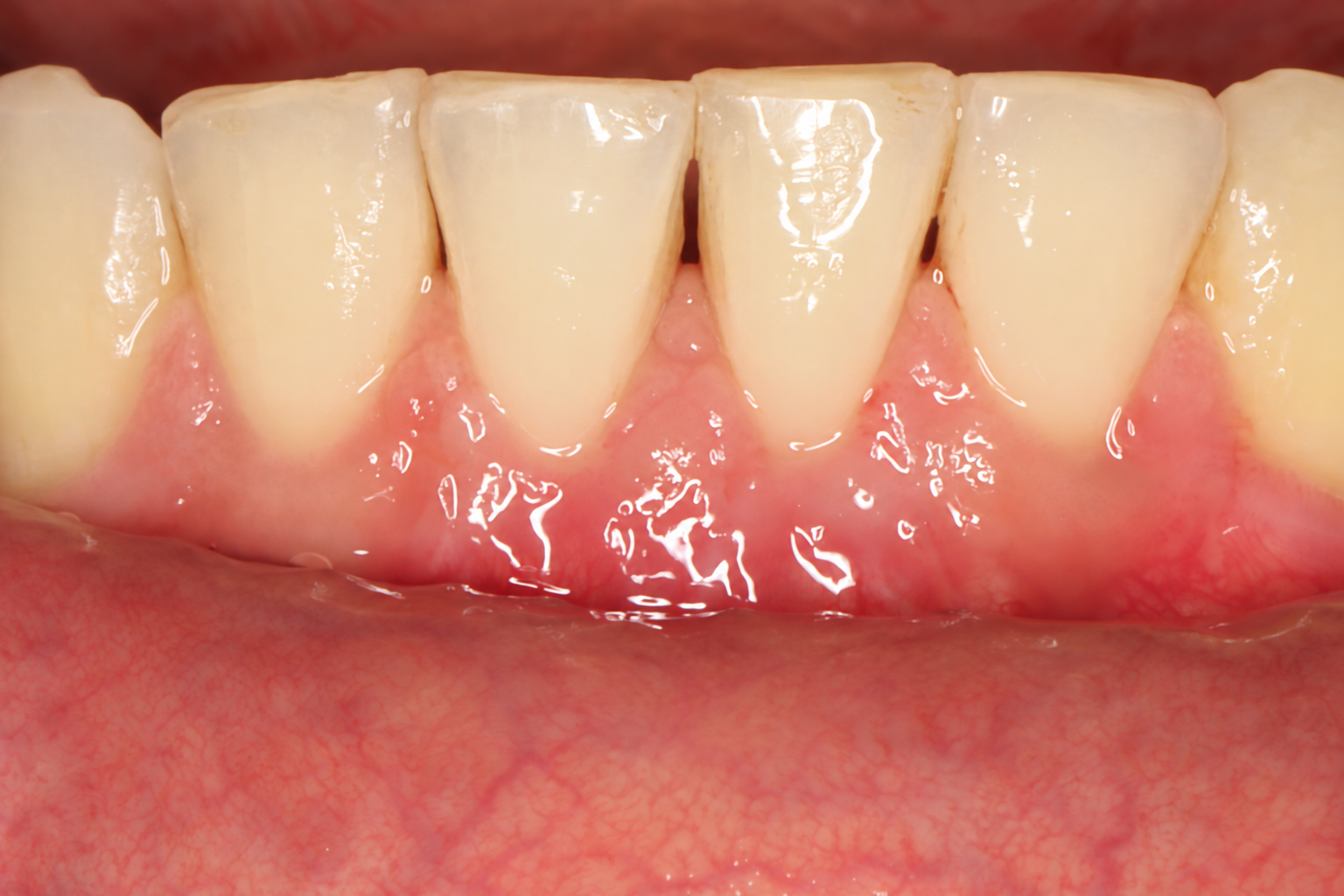
Gum grafting by Dr. Smith at the lower front teeth (teeth 24 and 25), shown before treatment and six months after surgery. Individual results vary.
Treatment: A donor-tissue graft (acellular dermal matrix, ADM) placed under a coronally advanced flap (CAF), which repositions the gum tissue toward the tooth crowns.
Photographs cropped and aligned for comparison, with a light brightness adjustment to the after image. The after photograph was also retouched with AI assistance to remove a saliva bubble between teeth 24 and 25.
Select an image to view it larger.
What happens if you wait?
Monitoring may be appropriate after an examination, especially when recession is stable and the exposed root is healthy.
An exposed root can become sensitive, worn, or decayed. Ask what needs monitoring and which changes should prompt another visit.
What does it cost?
Each office sets its own consultation fee, so ask when you book. Your treatment estimate depends on what the examination finds.
If a graft is proposed, ask how the number of teeth, the technique, and the tissue source affect your estimate. The guide to graft cost and recovery explains questions to ask.
Questions to bring to a consultation
- What is contributing to the recession?
- Is the exposed root healthy?
- Is a graft needed now, or can we monitor this?
- Should I change how I brush, and how?
- How much root coverage is realistic?
- What changes should prompt another visit?
Discuss your concern with Dr. Smith
Call the office you would like to visit and describe what you have noticed. If you are worried about discomfort or cost, mention it when you call.
Offices and contactSources for this guide
- Journal of Clinical Periodontology: support between teeth and root coverage (Cairo et al., 2011)
- Cambridge University Hospitals: gum recession and grafting
- American Academy of Periodontology: gum graft surgery
Authorship and clinical review
Written and reviewed by John L. Smith, DDS, MS, periodontist. Last reviewed .